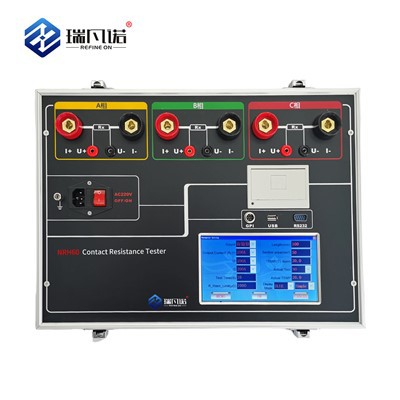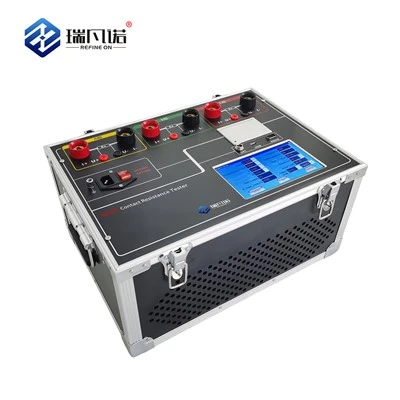

Yeah, so you might be wondering, can a resistance tester be used to test relays? I'm here to chat about this topic and share some insights as a resistance tester supplier.
First off, let's understand what we're working with. A resistance tester is a tool that measures the electrical resistance of an object. It comes in different types like Three Phase Loop Resistance Tester, Clamp On Earth Resistance Tester, Insulation and Resistance Tester, Loop Resistance Tester, and Electrical Earth Tester. Each type has its own specific functions and applications.
Now, a relay is an electrical switch that can be controlled remotely. It uses an electromagnet to open or close a circuit. Relays are super important in a whole bunch of electrical systems, from industrial machinery to home appliances.
So, can our resistance tester guys do the job of testing relays? The short answer is yes, it can. Here's how.
Relays have two main aspects that we can use a resistance tester for: the coil and the contacts.
Let's start with the coil. The coil in a relay is basically a wire wound around a core. When an electrical current passes through it, it creates a magnetic field that makes the relay switch. The resistance of the coil is a crucial parameter. A normal, working coil should have a specific resistance value. If the resistance is too high, it could mean the wire in the coil is damaged or broken. On the other hand, if the resistance is too low, there might be a short - circuit in the coil.
To test the coil with a resistance tester, all you have to do is set the tester to the appropriate resistance range and connect its leads to the two terminals of the relay coil. Then you simply read the resistance value on the tester. Compare this value with the specifications provided by the relay manufacturer. If it's within the expected range, then the coil is probably in good shape. If not, there's an issue that needs further investigation.
Now, onto the contacts. The contacts in a relay are the parts that actually make or break the electrical circuit. There are different types of contacts, like normally open (NO) and normally closed (NC). When the relay is in its resting state, the NO contacts are open, and the NC contacts are closed.
We can use a resistance tester to check if the contacts are working properly. For normally open contacts, when the relay is not energized, the resistance should be very high, close to infinity. This indicates that there's no electrical connection between the contacts. When you energize the relay, the NO contacts should close, and the resistance should drop to a very low value, ideally close to zero.
For normally closed contacts, it's the opposite. When the relay is in the non - energized state, the resistance should be very low, almost zero, showing that there's a good electrical connection. When you energize the relay, the NC contacts should open, and the resistance should go up to a high value.
However, there are some things to keep in mind when using a resistance tester to test relays.


The first thing is the accuracy of the tester. You need to make sure your resistance tester is calibrated correctly. If it's not, the readings you get might be way off, and you could end up misdiagnosing the relay. Also, the tester should have a suitable resolution. For example, if you're testing a relay with a very low - resistance coil, you need a tester that can accurately measure small resistance values.
Another thing is the environment. The temperature and humidity can affect the resistance readings. For instance, as the temperature goes up, the resistance of the coil might increase slightly. So, it's a good idea to note down the environmental conditions when you're taking the measurements.
And don't forget about the contact resistance of the tester leads. The leads themselves have some resistance, and if it's not accounted for, it can introduce errors in your measurements. You can try using high - quality leads and making sure they are clean and properly connected.
Now, let's talk about the benefits of using a resistance tester to test relays.
One big advantage is that it's a relatively simple and cost - effective method. You don't need a whole bunch of fancy equipment. All you need is a good resistance tester, and you can quickly check if a relay is working. This can save you a lot of time and money, especially in industrial settings where there are a large number of relays to test.
It also allows for preventive maintenance. By regularly testing the relays with a resistance tester, you can catch potential problems early on. For example, if you notice a gradual increase in the coil resistance over time, it could be a sign that the coil is starting to degrade. You can then replace the relay before it fails completely, which can prevent costly downtime in your electrical systems.
In conclusion, a resistance tester can definitely be used to test relays. It's a handy tool for checking both the coil and the contacts of a relay. Whether you're an electrician working on a home project or an engineer in an industrial plant, having a reliable resistance tester in your toolkit is a great idea.
If you're interested in getting your hands on a high - quality resistance tester for relay testing or other applications, feel free to reach out for a chat about procurement. We're here to provide you with the best solutions for your needs.
References
- Electrical Engineering Handbook, various editions
- Relay Manufacturer's Technical Documentation
- Resistance Tester User Manuals