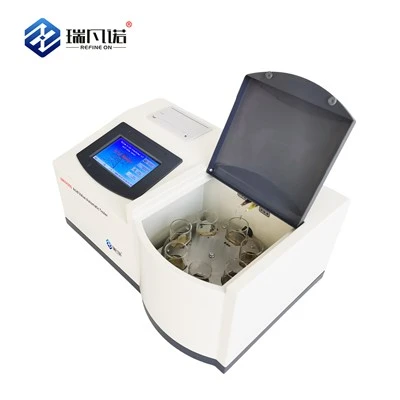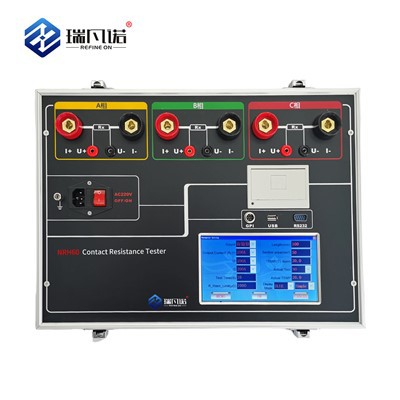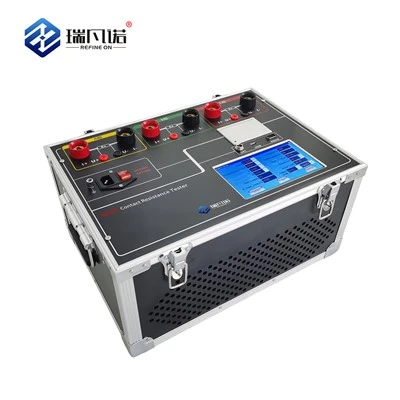

Hey there! As a supplier of Dissipation Factor Testers, I get asked a lot about the capabilities of our equipment. One of the most common questions is whether a Dissipation Factor Tester can measure the dissipation factor of different materials. Well, let's dive right into it and find out!
What is the Dissipation Factor?
Before we talk about the tester's ability to measure different materials, it's important to understand what the dissipation factor is. In simple terms, the dissipation factor (also known as the loss tangent) is a measure of how much energy is lost as heat in an insulating material when an alternating current (AC) is applied. It's a crucial parameter in assessing the quality and performance of insulating materials, especially in electrical and electronic applications.
A low dissipation factor means that the material is a good insulator, as it loses very little energy as heat. On the other hand, a high dissipation factor indicates that the material is a poor insulator, and a significant amount of energy is being wasted as heat. This can lead to overheating, reduced efficiency, and even failure of electrical components.
How Does a Dissipation Factor Tester Work?
A Dissipation Factor Tester is a specialized instrument designed to measure the dissipation factor of insulating materials. It works by applying an AC voltage to the material under test and measuring the current flowing through it. Based on the phase difference between the voltage and the current, the tester calculates the dissipation factor.
Most modern Dissipation Factor Testers use a bridge circuit, such as the Schering bridge or the Wien bridge, to measure the dissipation factor. These circuits are highly accurate and can measure the dissipation factor over a wide range of frequencies.
Measuring Different Materials
The good news is that a Dissipation Factor Tester can indeed measure the dissipation factor of different materials. Some of the most common materials that can be tested include:


1. Dielectric Materials
Dielectric materials are insulating materials that are used in capacitors, cables, and other electrical components. Examples of dielectric materials include ceramic, mica, glass, and plastics. A Dissipation Factor Tester can accurately measure the dissipation factor of these materials, allowing engineers to select the best material for their application.
2. Insulating Oils
Insulating oils are used in transformers, circuit breakers, and other electrical equipment to provide electrical insulation and cooling. Over time, these oils can degrade, leading to an increase in the dissipation factor. By regularly testing the dissipation factor of insulating oils, maintenance personnel can detect early signs of degradation and take appropriate action to prevent equipment failure.
3. Polymers
Polymers are widely used in the electronics industry due to their excellent insulating properties and low cost. However, the dissipation factor of polymers can vary depending on factors such as temperature, humidity, and frequency. A Dissipation Factor Tester can help manufacturers optimize the properties of polymers by measuring their dissipation factor under different conditions.
4. Fiberglass
Fiberglass is a composite material made up of glass fibers embedded in a resin matrix. It is commonly used in printed circuit boards (PCBs) and electrical insulation due to its high strength and excellent electrical properties. A Dissipation Factor Tester can be used to ensure the quality of fiberglass by measuring its dissipation factor.
Factors Affecting the Measurement
While a Dissipation Factor Tester can measure the dissipation factor of different materials, there are several factors that can affect the accuracy of the measurement. Some of these factors include:
1. Temperature
The dissipation factor of most materials is temperature-dependent. As the temperature increases, the molecular motion of the material also increases, leading to an increase in the dissipation factor. Therefore, it's important to measure the dissipation factor at a specific temperature and to take temperature variations into account when interpreting the results.
2. Frequency
The dissipation factor of some materials can vary significantly with frequency. For example, the dissipation factor of some polymers may increase at high frequencies due to the molecular relaxation processes. Therefore, it's important to measure the dissipation factor over a wide range of frequencies to fully understand the material's behavior.
3. Moisture
Moisture can have a significant impact on the dissipation factor of insulating materials. Water molecules can act as polar impurities, increasing the conductivity of the material and leading to an increase in the dissipation factor. Therefore, it's important to ensure that the material is dry before testing.
4. Sample Geometry
The geometry of the sample can also affect the measurement of the dissipation factor. For example, the thickness and area of the sample can influence the capacitance and resistance of the material, which in turn can affect the dissipation factor. Therefore, it's important to use samples of consistent geometry and to follow the appropriate test procedures.
Other Products in Our Range
In addition to Dissipation Factor Testers, we also offer a range of other testing equipment for the electrical industry. Here are some of our other products:
- Transformer Capacity Tester: This tester is used to measure the capacity of transformers accurately. It helps in determining the real - time load capacity of transformers, ensuring their safe and efficient operation.
- Transformer Turns Ratio MeterTransformer Turns Ratio Meter: This meter is designed to measure the turns ratio of transformers. Measuring the turns ratio is crucial for assessing the performance and health of transformers.
- Winding Resistance Test Set: This test set is used to measure the resistance of transformer windings. By measuring the winding resistance, it's possible to detect issues such as short - circuits and open - circuits in the windings.
- TD Tester: This tester is used to detect partial discharges in electrical equipment. Partial discharges can be a sign of insulation degradation, and early detection can prevent equipment failure.
- TTR Tester: This tester is used to measure the turns ratio of power transformers. It provides accurate and reliable results, helping in the maintenance and diagnosis of transformers.
Contact Us for Your Testing Needs
If you're in the market for a Dissipation Factor Tester or any of our other testing equipment, we'd love to hear from you. Our team of experts can help you choose the right product for your specific needs and provide you with all the support and guidance you need. Whether you're a small electronics manufacturer or a large utility company, we've got the solutions to meet your requirements. So, don't hesitate to reach out and start a conversation with us about your procurement needs.
References
- Smith, J. (2018). Electrical Insulation Handbook. Elsevier.
- Jones, A. (2019). Introduction to Dielectric Materials. Wiley.
- Brown, K. (2020). Testing and Maintenance of Electrical Equipment. McGraw - Hill.