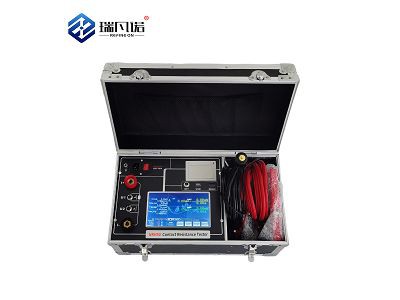

If you've ever worked in electrical maintenance, manufacturing quality control, or power distribution, you know that measuring very low electrical resistance accurately isn't just a nice-to-have-it's critical. Think about checking the contact resistance of high-voltage circuit breakers, the weld quality in automotive assembly lines, or the integrity of busbars in a substation. Even a tiny deviation here can lead to overheating, equipment failure, or even safety hazards. That's where a Duplex Micro-Ohmmeter comes in, and one of its most important specifications is resolution. As a supplier of these specialized instruments, I've spent years walking customers through exactly what resolution means for their applications, and how it differs from accuracy, sensitivity, or other terms they might confuse it with. Let's break this down clearly, because getting this right can make the difference between a reliable measurement and a costly mistake.
First, let's start with the basics: what is a micro-ohmmeter, and why duplex matters here. A standard ohmmeter measures resistance from milliohms up, but when you're dealing with values below 1 ohm-often down to microohms (1 µΩ = 0.000001 Ω)-you need a device designed specifically for low-resistance measurements. A Duplex Micro-Ohmmeter stands out because it typically combines two measurement modes in one unit, usually a 4-terminal (Kelvin) setup for precision and sometimes a 2-terminal mode for quicker checks on less critical connections. That Kelvin configuration is non-negotiable for low-resistance work, because it eliminates the error from lead and contact resistance that plagues basic ohmmeters. Now, resolution in this context is the smallest change in resistance that the instrument can detect and display. It's not the same as accuracy, which is how close a measurement is to a true standard, but it's a key part of how precise the reading can be. For example, if a device has a resolution of 0.01 µΩ, that means it can show a change as small as one ten-thousandth of a microohm. That might sound extreme, but for many applications, it's exactly what you need.
Why does resolution matter more for some users than others? Let's take an example: a power grid technician checking the contact resistance of a 138 kV circuit breaker. The manufacturer specifies that the contact resistance should be no higher than 50 µΩ, and a 1 µΩ increase can indicate wear that will lead to overheating during high-current operations. If the technician uses an instrument with a resolution of 10 µΩ, they won't be able to spot that small, critical change. But a Duplex Micro-Ohmmeter with a resolution of 0.01 µΩ can pick up that tiny shift, allowing for proactive maintenance before a failure occurs. For manufacturing, think of a automotive parts maker checking resistance in spot welds. Welds that are too high in resistance might be weak, while too low could indicate misaligned electrodes. A resolution of 0.1 µΩ means they can catch even minor inconsistencies in the welding process that would have slipped through with a less precise device. This is why when customers first reach out, I always start by asking about their specific use case-because a precision electronics lab might need a resolution of 0.001 µΩ, while a field technician doing quick checks on distribution lines might be fine with 0.1 µΩ, as long as their accuracy requirements are met.
Now, how is the resolution of a Duplex Micro-Ohmmeter determined? It's not a random number; it's a combination of several design choices. First, the internal analog-to-digital converter (ADC) is a big factor. ADCs convert the analog voltage drop across the test sample into a digital value, and the number of bits in the ADC directly affects resolution. A 16-bit ADC can resolve smaller changes than a 12-bit one, but for microohmmeters, we often use 24-bit ADCs because they handle very small voltage signals (since a 1 µΩ resistance at 1 A test current produces a 1 µV drop-tiny enough that noise is a major concern). Then there's the test current: higher test current increases the voltage drop, which makes it easier to detect small resistance changes, as long as the sample can handle the current without damage. A Duplex Micro-Ohmmeter might offer variable test currents, from 1 A up to 100 A or more, so users can adjust based on their needs-but that also affects the minimum resolvable change. Other design elements include low-noise amplifiers, shielded test leads, and calibration routines that reduce drift. Even something as simple as the display matters: some instruments have a 5-digit display, while others have 7 or more, which allows them to show smaller increments. For instance, a 5-digit display might show 10.0 µΩ, while a 7-digit display can show 10.0000 µΩ-so the latter has better resolution.
I often get asked, "Is higher resolution always better?" The answer is almost yes, but with a caveat. There's a limit, because the very smallest resolutions can be affected by noise and environmental factors. If you're testing a sample in a noisy industrial environment, the tiny signal from a 0.001 µΩ change might be masked by electrical interference from nearby motors or power lines. In that case, even a high-resolution instrument might not give you a reliable reading, so you might need to balance resolution with noise rejection features. For example, our Duplex Micro-Ohmmeter includes built-in noise filtering and averaging modes that help clean up readings without sacrificing resolution when you need it. That's one of the advantages of investing in a specialized instrument rather than a general-purpose one. Another caveat is cost: instruments with sub-microohm resolution can be more expensive, so it's important to match the resolution to your actual application. If you're measuring resistances in the milliohm range (like some low-resistance cables), a resolution of 10 µΩ is more than sufficient, and you can save money without losing precision.
To put this in perspective, let's compare resolution across similar instruments you might encounter in the field. A 3-Point Earth Tester, for example, is used for measuring earth electrode resistance, which is typically in the ohm to kilohm range. Its resolution is usually around 0.1 ohms, because you're dealing with much larger values, so high resolution isn't needed there. Similarly, a Loop Resistance Tester measures the resistance of electrical loops (like in wiring circuits), which are in the milliohm to ohm range, so resolutions are higher than the earth tester but not as precise as a micro-ohmmeter. An Electrical Earth Tester also has a similar resolution range to the 3-Point Earth Tester, since its purpose is different-testing earth connections for safety, not low-resistance contacts. Even a Digital High Voltage Insulation Tester, which measures insulation resistance in megaohms or gigaohms, has a resolution geared toward those large values, not the tiny microohms we handle with our Duplex Micro-Ohmmeter. This makes sense when you think about what each instrument is designed to do; each is optimized for a specific range of resistance, so their resolutions are tailored to that range.
Let's talk about real-world examples of how resolution impacts outcomes. A few years ago, we supplied a Duplex Micro-Ohmmeter to a wind turbine manufacturer. They were testing the connection resistance between the turbine's generator cables and the main power bus. Their previous instrument had a resolution of 5 µΩ, and they were rejecting about 2% of components that appeared to have resistance just over the threshold. After switching to our instrument with 0.01 µΩ resolution, they realized many of those "out-of-spec" parts were actually within the acceptable range-the old resolution had rounded the values up incorrectly. This not only saved them money by reducing scrap but also improved their production line efficiency. On the flip side, a power utility client used an instrument with too low a resolution when checking distribution switchgear. They missed a 2 µΩ increase in contact resistance, which led to a minor overheating event that required a shutdown. Once they upgraded to a higher resolution Duplex Micro-Ohmmeter, they caught similar issues before they caused downtime. These stories are why I emphasize resolution so much- it's not just a spec number, it's a tool for reliability and safety.
Another common question: "How do I verify the resolution of my Duplex Micro-Ohmmeter?" The key here is calibration. To ensure your instrument is displaying the correct smallest increment, you need to use precision reference resistors-known standards of very low resistance, like 0.01 µΩ or 0.1 µΩ, with a traceable calibration to national standards. Regular calibration (at least annually, depending on usage) ensures that the ADC, amplifiers, and display are all working as intended. When we supply a Duplex Micro-Ohmmeter, we include a calibration certificate, and we recommend that users perform regular spot checks with test resistors to confirm resolution is consistent. It's also important to note that resolution can vary across measurement ranges. Most micro-ohmmeters have multiple ranges-for example, a 0.1 µΩ to 100 µΩ range, a 10 µΩ to 10,000 µΩ range, and so on. The resolution is usually best on the lowest range, because that's where the smallest resistances are being measured. So if you're testing a 5 µΩ sample, using the lowest range will give you the highest resolution, while using a higher range might reduce the precision (say, to 1 µΩ increments). That's why it's best to select the measurement range that matches your expected resistance value.
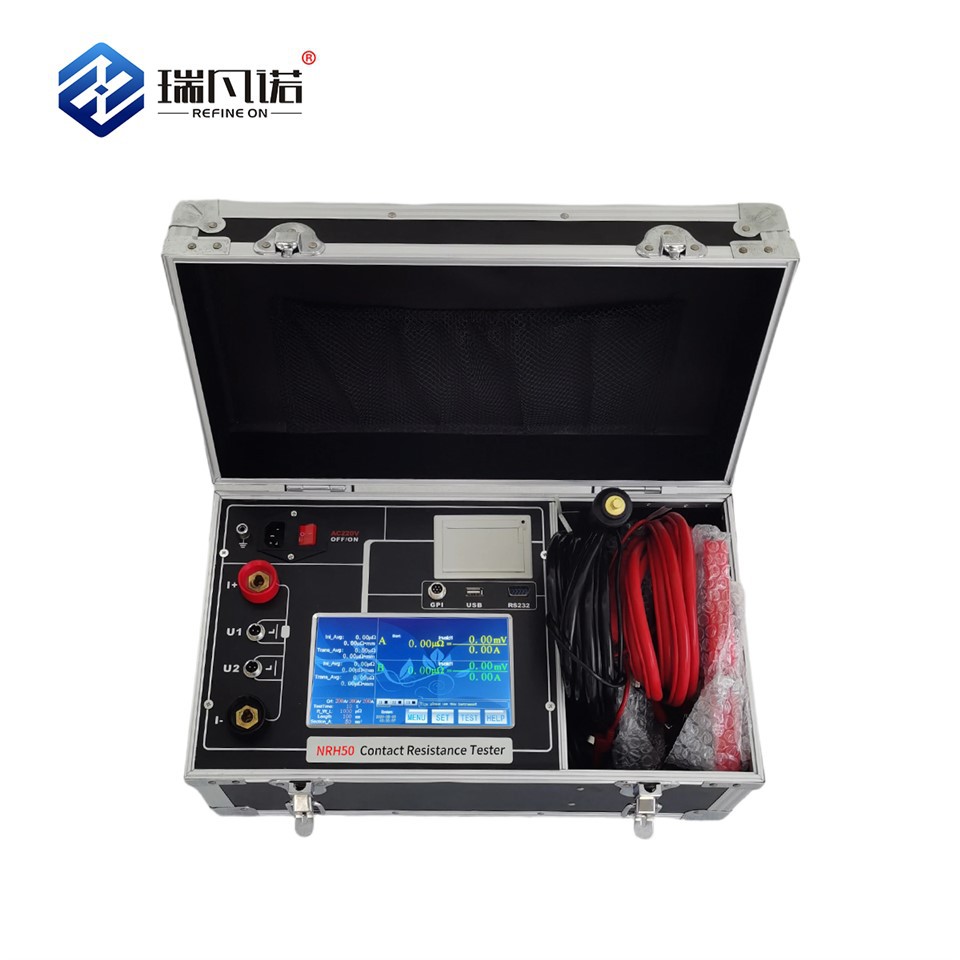
As a supplier of Duplex Micro-Ohmmeters, I've seen that many customers overlook resolution when comparing instruments, focusing instead on price or maximum test current. But in our experience, resolution is one of the most impactful specs for long-term value. A cheaper instrument with low resolution might work for a few simple applications, but if your needs grow-whether you're moving to more precise manufacturing, handling higher-voltage equipment, or needing to meet stricter industry standards-you'll have to upgrade. That's why we design our Duplex Micro-Ohmmeters with flexible resolution options and range settings, so users can adapt as their work evolves. We also provide clear guidance on selecting the right resolution based on their specific tests, from initial setup through ongoing use.
If you're in the market for a resistance tester and want to understand more about how resolution works, or if you're looking for a Duplex Micro-Ohmmeter that meets your precision needs, we're here to help. We can walk you through the different resolution options, explain how they apply to your specific applications, and even provide sample calculations to show exactly how small a change you can detect. Whether you're a technician on the field, a quality engineer in a factory, or a maintenance manager at a power facility, choosing the right instrument with the right resolution can save you time, money, and prevent safety issues down the line.
If you'd like to discuss your requirements, or learn more about how our instruments can support your work, please reach out to our team for a personalized consultation.
References
- Standards for Low Resistance Measurement, International Electrotechnical Commission (IEC) 61557-5
- Micro-Ohmmeter Design and Application, Instrumentation and Measurement Technology Conference Proceedings, 2019
- Electrical Resistance Testing for Industrial Maintenance, Journal of Electrical Safety Engineering, 2021
- Precision Measurement of Low Resistances, National Institute of Standards and Technology (NIST) Handbook 130