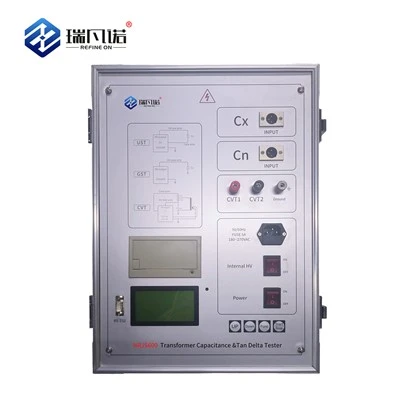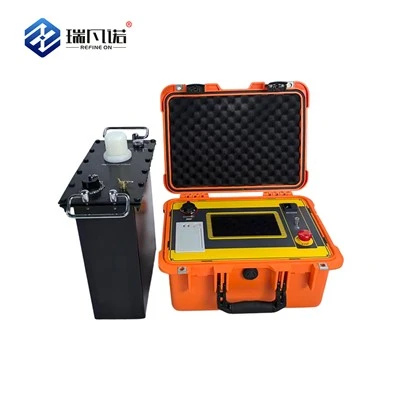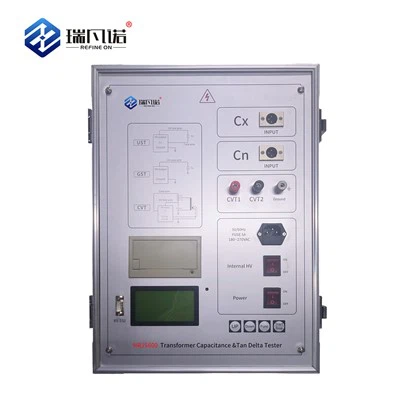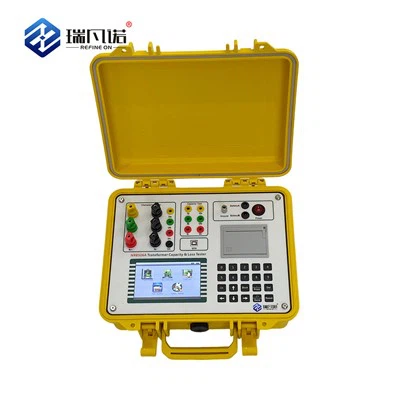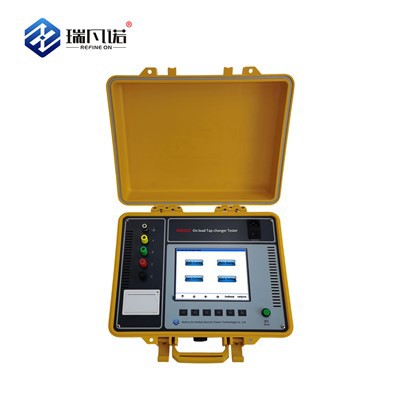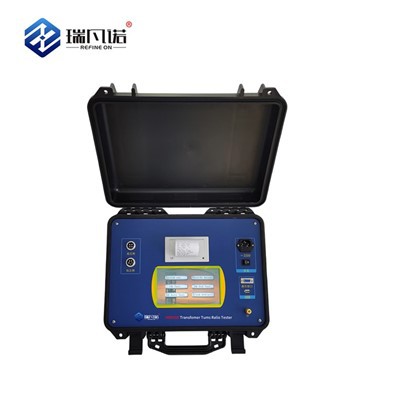
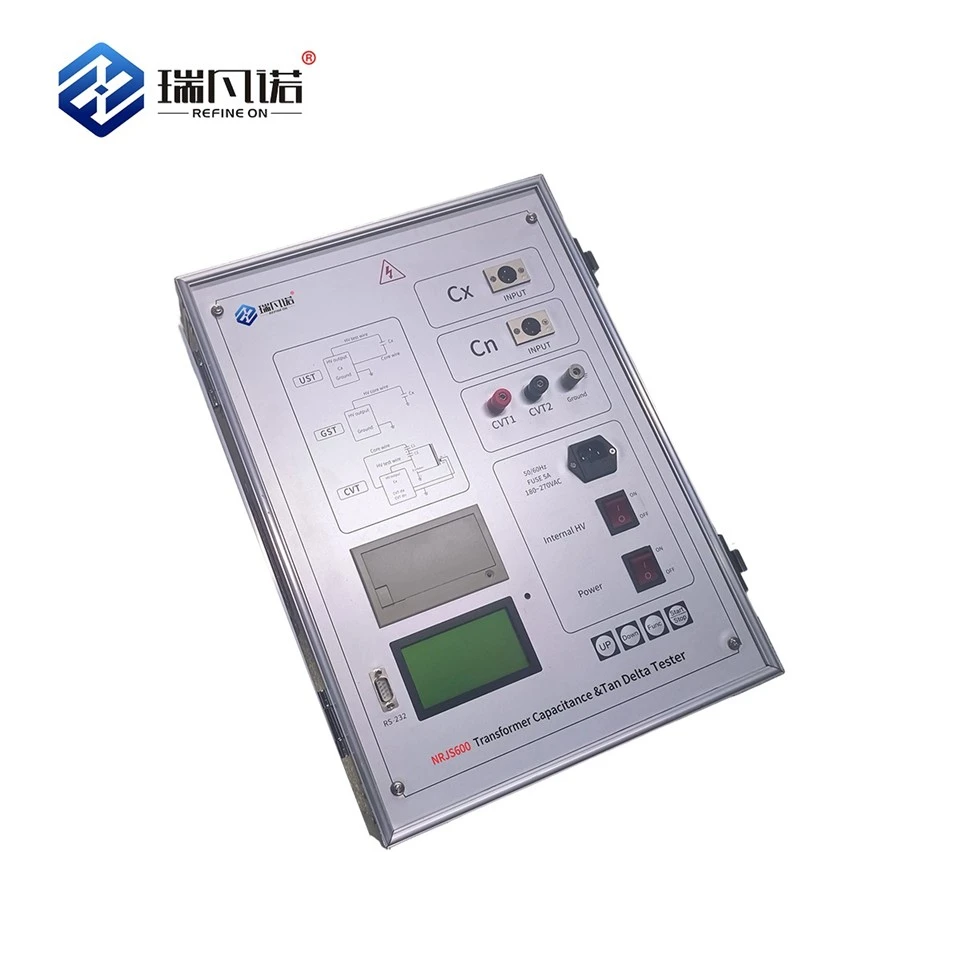
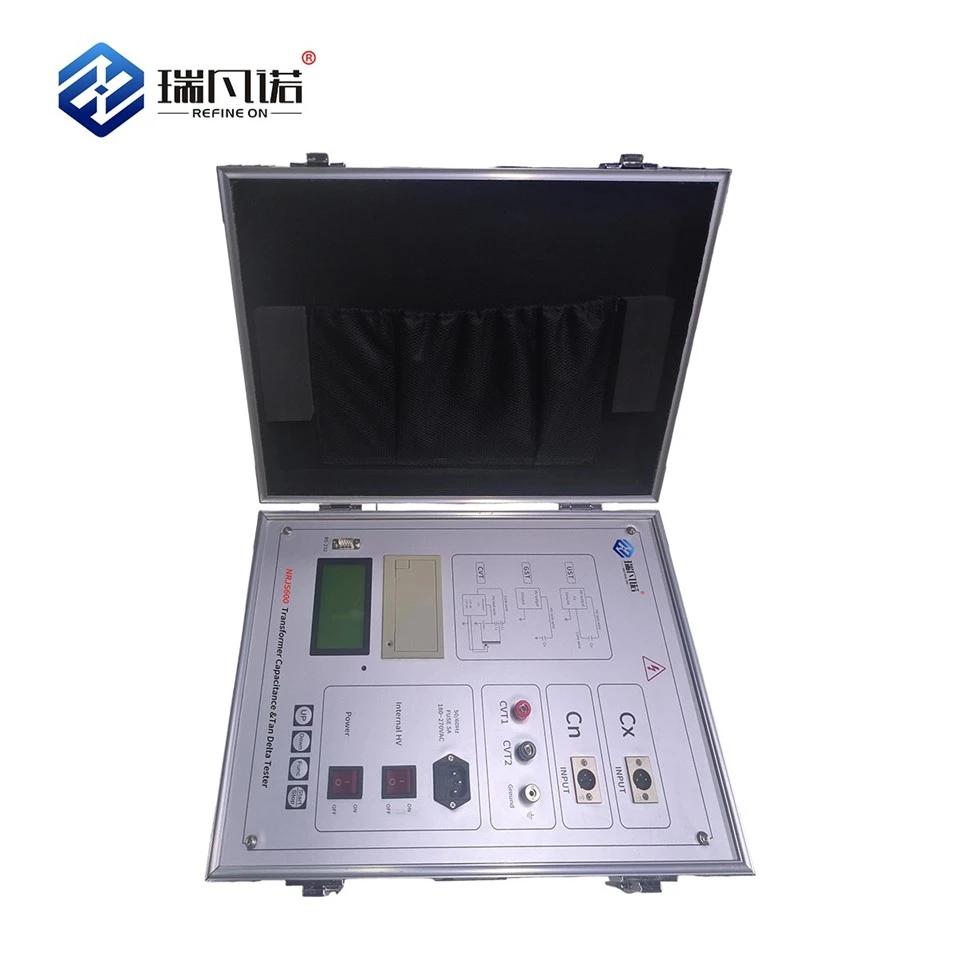
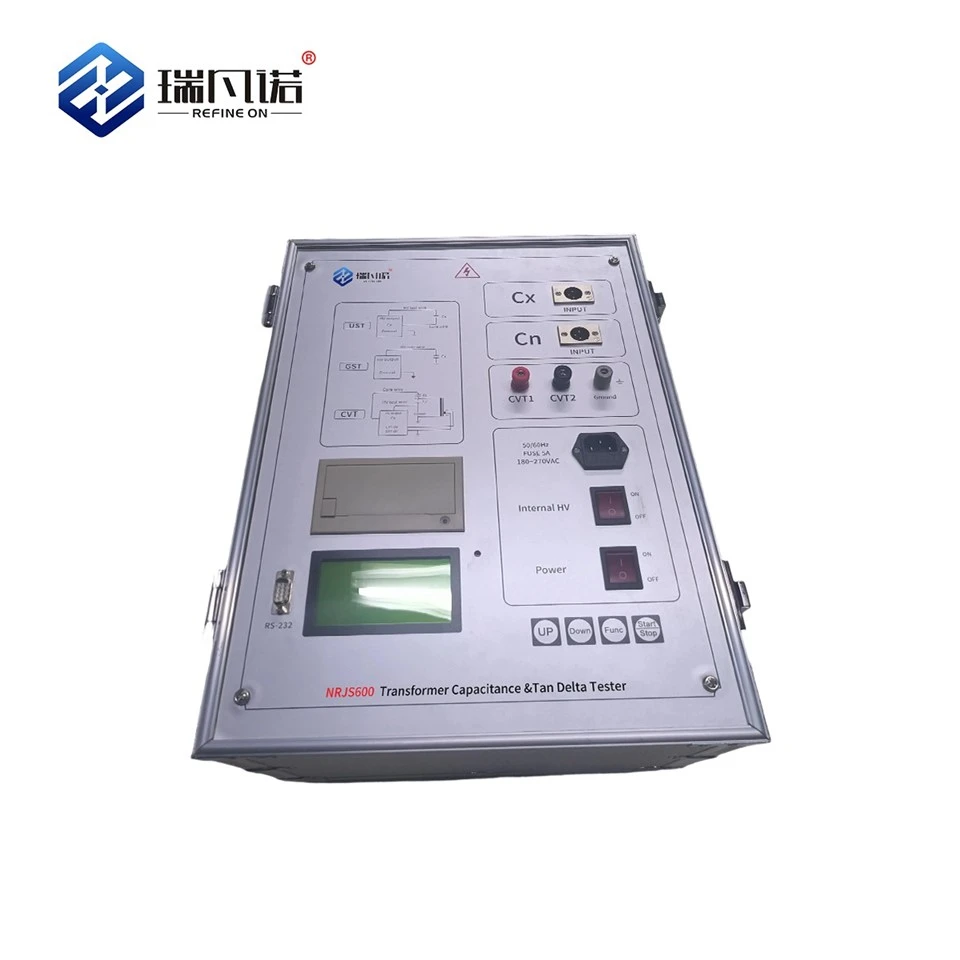
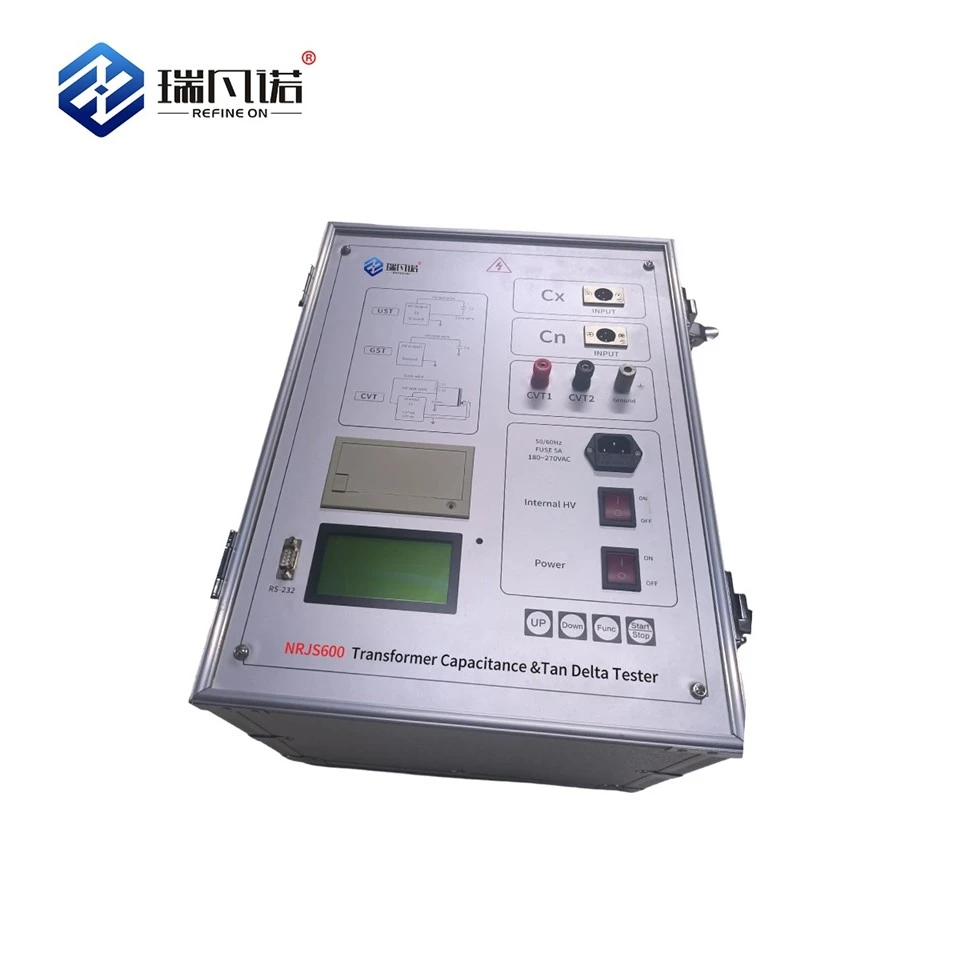
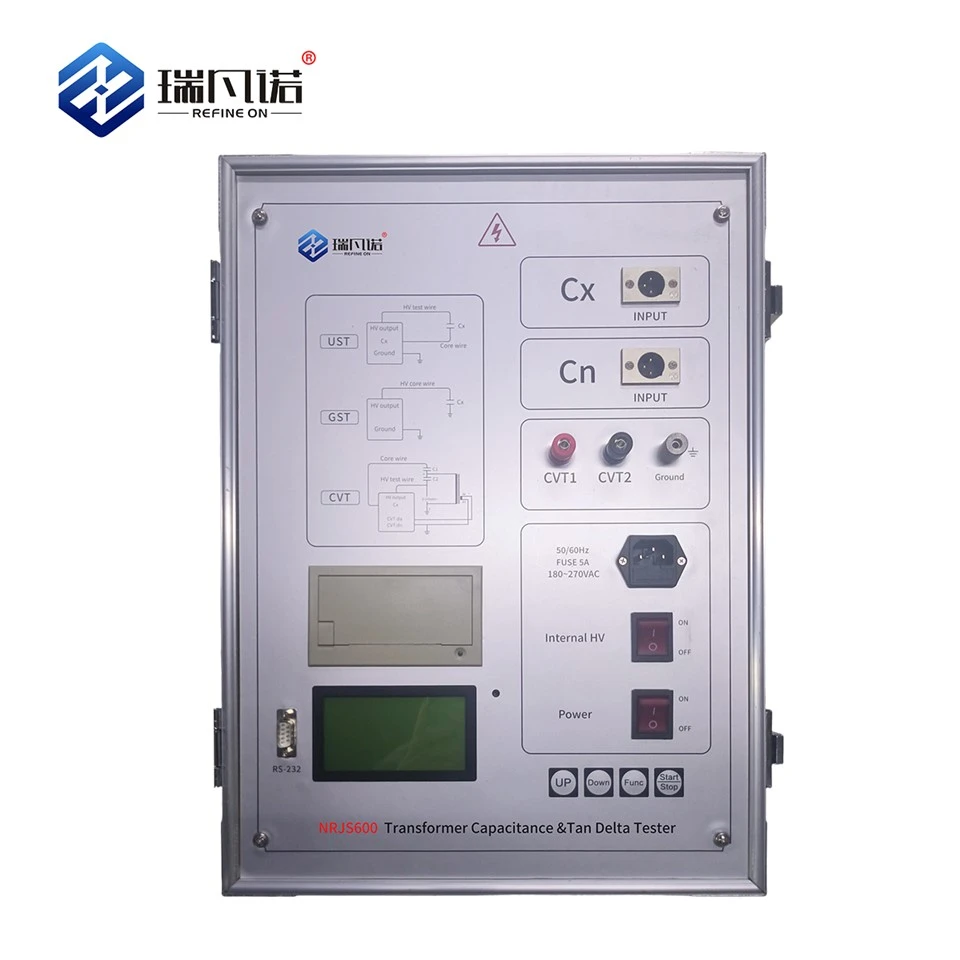
Refine On (Hebei) Electric Power Technology Co., Ltd. is one of the leading manufacturers and suppliers of td tester in China. If you're going to wholesale durable td tester, welcome to get quotation from our factory. All customized products are with high quality and competitive price.
Application Scenarios

Before power equipment is put into operation, the tangent value (tanδ) must be tested using a TD Tester as the original baseline data. Operating equipment must undergo periodic retesting, comparing the results with historical data or standard limits to determine if it has deteriorated. The same applies to equipment that has undergone major overhauls. The dielectric loss tangent (tanδ) is a sensitive parameter reflecting the insulation condition; the larger the value, the more severe the insulation defects (moisture absorption, aging).
Parameter
|
Parameter |
Specification |
|
1. Measurement Accuracy |
|
|
Capacitance Accuracy (Cx) |
± (reading × 1% + 1pF) |
|
Dielectric Loss Accuracy (tgδ) |
± (reading × 1% + 0.00040) |
|
Anti-interference |
Frequency conversion anti-interference; above accuracy maintained even under 200% interference |
|
2. Capacitance Range |
|
|
Internal Voltage Mode |
3pF ~ 60,000pF / 10kV |
|
External Voltage Mode |
3pF ~ 1.2μF / 10kV |
|
Resolution |
Up to 0.001pF, 4 significant digits |
|
tgδ Range |
Unlimited; resolution 0.001%; auto-identifies capacitance, inductance & resistance samples |
|
Test Current Range |
10μA ~ 5A |
|
3. Internal Voltage Source |
|
|
Voltage Range |
0.5 ~ 10kV (continuously adjustable) |
|
Max Output Current |
200mA |
|
Voltage Adjustment |
Continuous & smooth |
|
Voltage Accuracy |
± (1.5% × reading + 10V) |
|
Voltage Resolution |
1V |
|
Test Frequency |
45 ~ 65Hz integer frequency |
|
Frequency Accuracy |
±0.01Hz |
|
4. External Voltage & CVT Mode |
|
|
Max Test Current (Upright Wiring) |
1A / 40 ~ 70Hz |
|
Max Test Current (Reverse Wiring) |
10kV / 1A / 40 ~ 70Hz |
|
CVT Self-Excited LV Output |
Voltage: 3 ~ 50V |
|
Measuring Time |
Approx. 30s (varies by test method) |
|
5. General Specifications |
|
|
Input Power |
180V ~ 270VAC, 50Hz/60Hz ± 1% |
|
Communication Interface |
Standard RS232 interface (optional) |
|
Printer |
Built-in mini thermal printer |
|
Ambient Temperature |
-10℃ ~ 50℃ |
|
Relative Humidity |
< 90%, no condensation |
Features
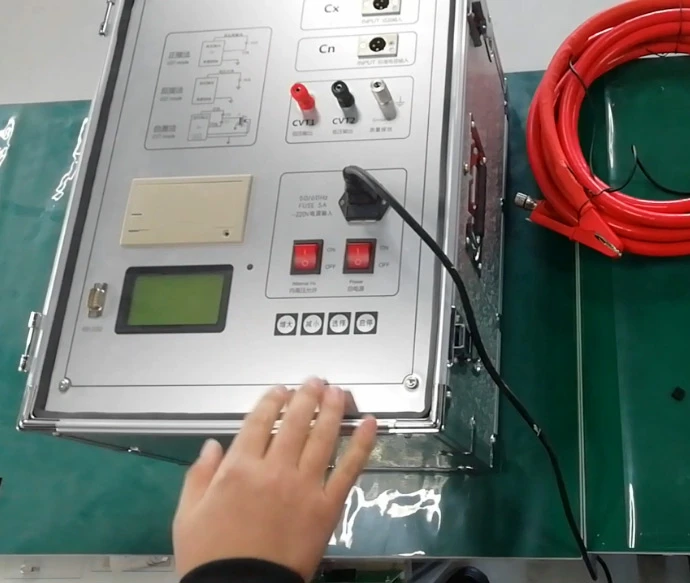
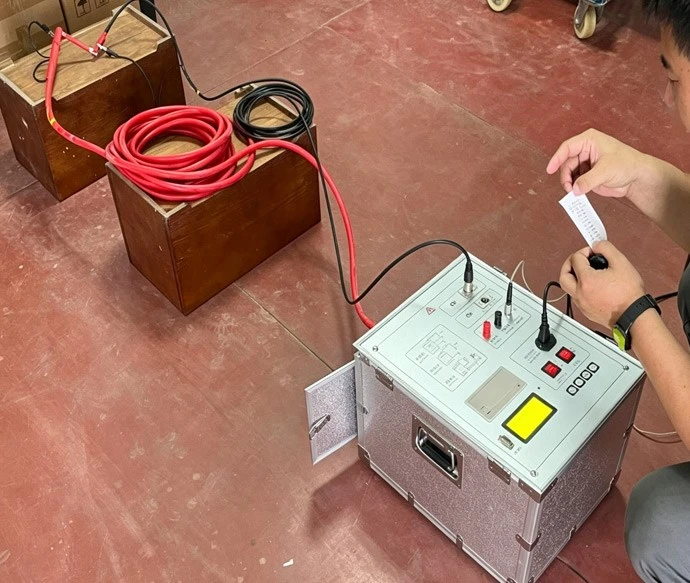
The TD Tester employs technologies such as frequency fluctuation, digital waveform analysis, and bridge self-calibration, enabling accurate measurements with both forward and reverse wiring. All input resistances across all ranges are below 2Ω, eliminating the influence of additional capacitance on the test leads.
01
It can also perform dielectric loss tests on insulating oil using an external oil cup, further enhancing its functionality.
02
The TD Tester features high-voltage and low-voltage protection functions. In the event of high-voltage current fluctuations or sudden power outages causing low voltage, the protection mechanism is activated to safeguard equipment and personnel.
03
When using the CVT self-excitation method, C1/C2 can be measured simultaneously with a single connection, eliminating the need for wire replacement and simplifying operation.
04
It includes a calendar clock function and can store 100 sets of measurement data.
05
FAQ
Q: A transformer test result shows that the tanδ value hasn't changed much, but the capacitance value has deviated from the initial standard. How can this be identified as a defect?
A: This is a localized defect, such as internal insulation bubbles, delamination, cracking, bushing contamination, or damaged skirts. If the tanδ value increases while the capacitance value remains unchanged, it indicates an overall defect.
Q: What is the difference between high-voltage dielectric loss and other insulation performance testing equipment?
A: The tested tanδ value quantifies insulation performance, reflecting the degree of insulation of the tested object and its future service life.
Q: How are the initial capacitance and tanδ values of insulation equipment obtained?
A: Before commissioning at the factory, two values are tested as initial baseline data. After operation, these values are periodically retested.
Hot Tags: td tester, China td tester manufacturers, suppliers, factory, dielectric loss tester, OLTC Analyzer, Three Phase Transformer Turns Ratio Tester, Transformer Load Tester, Transformer Loss Tester, transformer resistance meter