
Hey there, folks! As a supplier of Transformer Ratio Testers, I've seen it all when it comes to different models of these nifty machines. And let me tell you, there are some significant differences between them. In this blog, I'm gonna break down these differences so you can make an informed decision when it's time to pick the right tester for your needs.
1. Accuracy and Precision
One of the most important things to consider when choosing a Transformer Ratio Tester is its accuracy and precision. Different models offer varying levels of these crucial factors.

Some high - end models are designed to provide extremely accurate results, with tolerances as low as ±0.01%. These are the go - to testers for applications where even the slightest deviation can lead to big problems, like in large power transformers for the electrical grid. On the other hand, more budget - friendly models may have tolerances around ±0.1%, which is still acceptable for many smaller transformers used in industrial or commercial settings.
If you're working on a project that demands high precision, you might want to check out our Transformer Turns Ratio Meter. It's engineered to give you the most accurate readings possible, ensuring that you can trust the data you're getting.
2. Testing Range
Another big difference between models is the testing range. Transformers come in all shapes and sizes, from small ones used in electronics to massive ones used in power generation. And different testers are built to handle different ranges of transformer ratios.
Some testers are designed for low - ratio transformers, typically with ratios up to 100:1. These are great for applications like testing control transformers or small distribution transformers. Other models, however, can handle much higher ratios, up to 5000:1 or more. These are essential for testing high - voltage power transformers.
When you're deciding on a tester, think about the range of transformers you'll be working with. If you work with a wide variety of transformers, you might want a tester with a broader range. Our TTR Tester offers a wide testing range, making it a versatile option for many different types of transformer testing.
3. Testing Speed
In today's fast - paced world, time is money. And that's especially true when it comes to transformer testing. Different models of Transformer Ratio Testers have different testing speeds.
Some modern testers are equipped with advanced technology that allows them to perform tests in a matter of seconds. These are great for high - volume testing, where you need to test a large number of transformers quickly. In contrast, older or more basic models might take several minutes to complete a test.
If you're in a hurry to get your testing done, look for a tester with a fast testing speed. Our testers are designed with speed in mind, so you can get the job done quickly and move on to the next project.
4. Portability
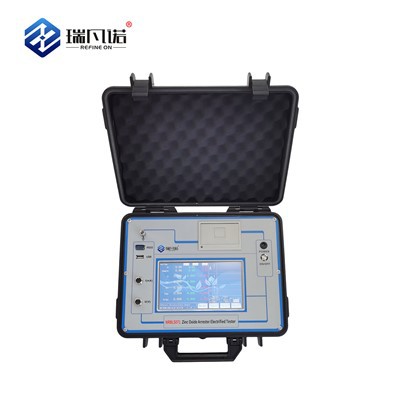
Portability is another factor that varies between different models. If you need to take your tester to different job sites, then a portable model is a must.
Some Transformer Ratio Testers are light and compact, making them easy to carry around. They might come with a handle or even fit into a backpack. These are perfect for electricians or technicians who are on the go. Other models, especially those designed for large - scale laboratory testing, are bulkier and less portable.
If you're always on the move, consider our portable testers. They're designed to be easy to transport without sacrificing performance.
5. Connectivity and Data Storage
In the digital age, connectivity and data storage are important features. Different models of Transformer Ratio Testers offer different levels of these features.
Some testers come with built - in Wi - Fi or Bluetooth connectivity, allowing you to transfer test data directly to your smartphone, tablet, or computer. This makes it easy to share data with your team or store it for future reference. Additionally, some models have large internal storage capacities, so you can save multiple test results without having to transfer them immediately.
Our testers are equipped with the latest connectivity options and ample data storage. This means you can keep track of all your test results and share them with ease, whether you're working in the field or in the office.
6. Additional Testing Functions
Beyond just testing the transformer ratio, some models come with additional testing functions. For example, some testers can also perform DC Winding Resistance Testing. This is important because the winding resistance can give you insights into the health of the transformer's windings.
Other models might include insulation power factor testing capabilities, which help you assess the condition of the transformer's insulation. Our Insulation Power Factor Tester is a great option if you need this additional functionality.
If you want a tester that can do more than just measure the ratio, look for a model with these additional features. It can save you time and money by eliminating the need for multiple testing devices.
7. Ease of Use
Last but not least, the ease of use of a Transformer Ratio Tester can vary widely between models. Some testers have complex interfaces with lots of buttons and settings, which can be intimidating for new users. Others, however, have simple and intuitive interfaces that make them easy to operate, even for those with limited technical knowledge.
Our testers are designed with the user in mind. We've made sure that the interfaces are easy to understand and navigate, so you can start testing your transformers right away without spending hours reading the manual.
So, there you have it, folks! These are some of the main differences between different models of Transformer Ratio Testers. When you're in the market for a tester, think about your specific needs, such as accuracy, testing range, speed, portability, connectivity, additional functions, and ease of use.
If you're interested in learning more about our Transformer Ratio Testers or have any questions about which model is right for you, don't hesitate to reach out. We're here to help you make the best choice for your transformer testing needs. Let's start a conversation and get you the perfect tester for your projects.
References
- Electrical Testing Handbook
- Transformer Testing Standards and Guidelines