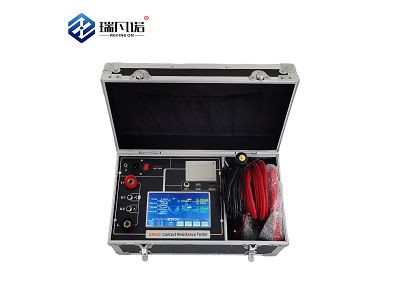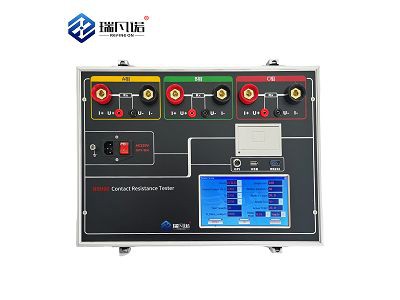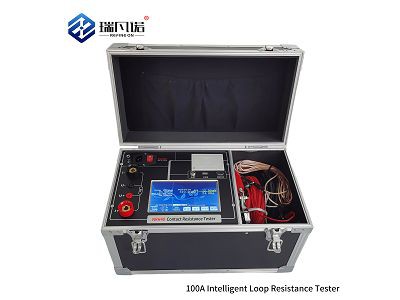
The modern surge arrester tester features a large-screen color LCD display, supporting touchscreen or Windows-style interface operation. The menu is user-friendly, and wiring diagrams are provided. It boasts a high degree of automation, facilitating on-site operation. The instrument utilizes a high-performance ARM processor with a DSP floating-point processing unit, employing digital signal processing technology. It features strong anti-interference capabilities and high measurement accuracy. Users can directly observe signal waveforms on the LCD screen, which also functions as an oscilloscope. It is safe and reliable; the voltage channel uses an isolation transformer and high-impedance voltage divider technology for V/I conversion, thus avoiding short circuits on the PT secondary side.
The instrument adopts a modular design, separating the main unit from the voltage acquisition unit. It is small, lightweight, and easy to carry. The instrument is AC/DC dual-use, with a built-in high-energy lithium-ion battery that allows for continuous operation for over 8 hours after a full charge, making it particularly suitable for power-free environments. It supports both on-site live-line measurement of zinc oxide surge arresters and laboratory factory and acceptance testing.
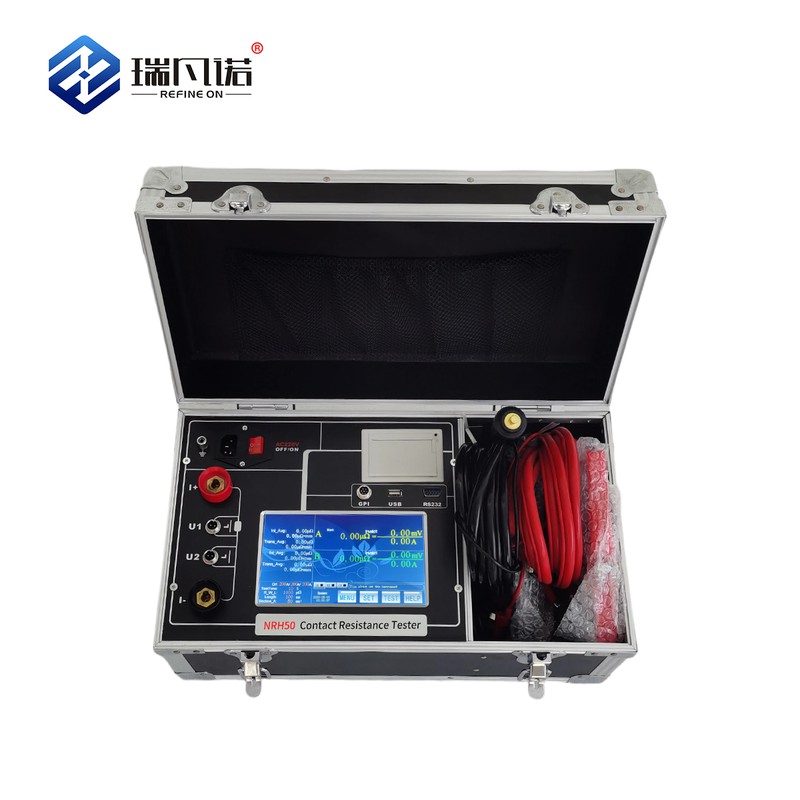
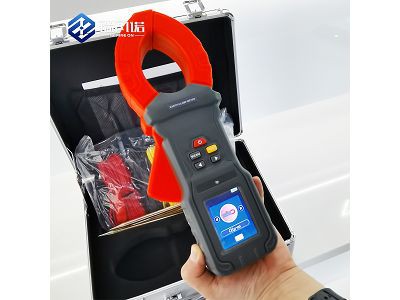
The instrument features intelligent power management, remaining power display, automatic backlight adjustment, and a built-in real-time clock. Equipped with a built-in large-capacity memory, it can store a large amount of test data, supporting historical data retrieval and USB flash drive export. Some models have a built-in mini thermal printer for on-site printing of measurement data and reports. The instrument supports true three-phase MOA simultaneous measurement and can automatically compensate for phase-to-phase interference. It provides multiple voltage reference signal sampling methods, including wired PT power supply, wireless PT power supply, PT-free mode, and induction board electric field signal sampling. Current acquisition supports both direct wiring and current clamp sampling methods to adapt to different field conditions.