1. General Requirements for Daily Maintenance of the Instrument
As a high-tech instrument, the cable fault tester, priced between tens of thousands and hundreds of thousands of yuan, is considered a relatively sophisticated instrument. Users generally handle it with care, assigning specific personnel for its care and use. However, excessive caution is unnecessary. These instruments are generally quite durable. As long as proper usage methods are followed and accidental drops or impacts are avoided, they will not be damaged. For instruments with LCD displays, avoid external force that could damage the LCD screen; for instruments with CRT displays, handle the entire unit with care; after use, wipe the probes, probes, and other accessories clean to prevent rust; after use, neatly coil all test leads to avoid pulling or causing malfunctions during subsequent use. It should be noted that normal power-on learning, simulation, and field testing will not affect the instrument's lifespan. Therefore, users should learn and test frequently to improve their testing skills.
2. Maintenance of DC-Powered Testers
For instruments powered by DC, if using dry cell batteries, replace the batteries regularly to prevent leakage and damage. If using rechargeable batteries, fully charge the batteries before storing for extended periods and recharge the instrument approximately every three months. For lead-acid batteries, avoid completely depleting the battery before use to prevent recharging.
3. Repair of Cable Fault Testers
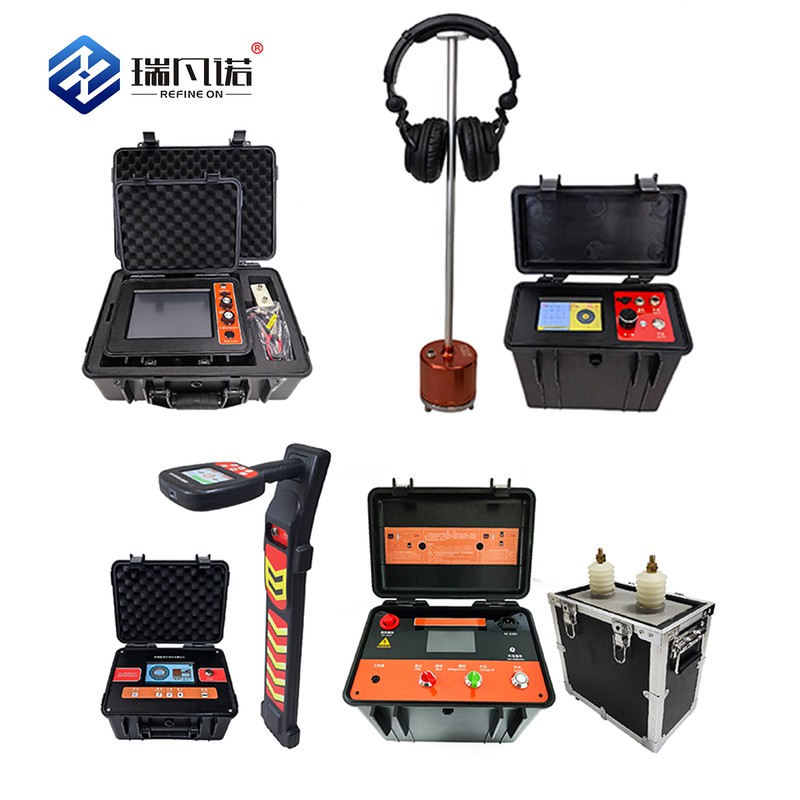
The repair of cable fault testers is primarily the responsibility of the manufacturer. For industrial instruments, manufacturers generally do not provide detailed technical drawings to users to maintain technical confidentiality, which can inconvenience users during repairs. However, to facilitate user use and repair, manufacturers will generally provide relevant repair drawings upon request, which benefits both parties. Most instrument malfunctions encountered by users are simple minor issues that they can resolve themselves. Examples include insufficient battery power, improper adjustment of the contrast display potentiometer causing the instrument to not display anything, improper adjustment of the pulse amplitude control potentiometer and pulse width control switch causing the instrument to fail to sample or the sampled waveform to be unrecognizable, broken test lead connectors, and problems caused by a lack of understanding of the instrument's various functions. Users can easily resolve these issues by carefully following the instruction manual or consulting the manufacturer's engineers via phone or internet. Only when a more serious hardware malfunction is confirmed, such as severe impact, high-voltage electric shock, water ingress, high temperature exposure, or even internal component burnout and smoke, will the manufacturer generally be required to provide repair services.