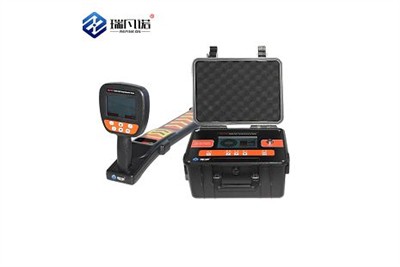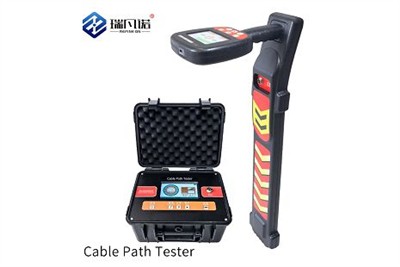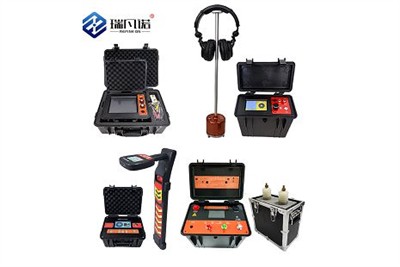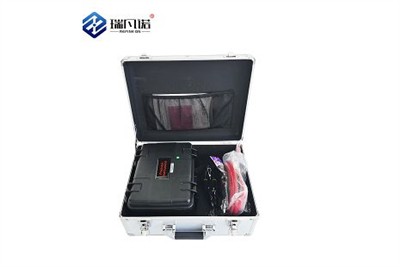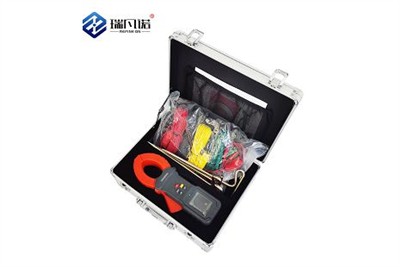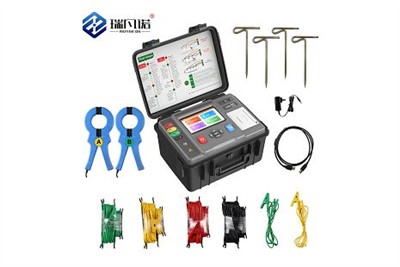
Resistant tools for electrical safety inspections and grounding project completion acceptance. Loop resistance meters (transformer loop resistance testers) are suitable for testing the contact resistance of main contacts of high and low voltage switches, and the DC resistance of high and low voltage cable lines. Intelligent loop resistance testers use a 100A constant current output. The maximum output voltage reaches 10V (2-3 times that of conventional instruments). They can use thin test leads, greatly reducing the workload of on-site testing personnel. The entire testing process is automatically implemented by a single-chip control, with high accuracy, good repeatability, single-button operation, and easy operation. Test data is displayed on an LCD screen. Suitable for various working environments. Grounding resistance testers are commonly used instruments for measuring grounding resistance. In recent years, due to the rapid development of computer technology, grounding resistance testers have incorporated a significant amount of microprocessor technology, resulting in measurement functions, capabilities, and accuracy unmatched by ordinary instruments.
DC resistance testers are a new generation of instruments for testing the DC resistance of transformers. They can automatically select the test current according to different types of power transformers and display the test results at the fastest speed. DC resistance testers also have storage, printing, and discharge indication functions. They have built-in non-volatile memory for long-term storage of measurement data. The use of an LCD display makes the instrument user-friendly, making it the preferred equipment for DC resistance testing.