
How does a Hipot Voltage Phasing Tester work?
Hey there! As a supplier of Hipot Voltage Phasing Testers, I'm stoked to break down how these nifty gadgets work. So, let's dive right in.
First off, what's a Hipot Voltage Phasing Tester? Well, it's a crucial tool in the electrical industry. It's used to test the electrical insulation of various devices and systems. You see, electrical insulation is super important. It helps prevent electrical shocks, short - circuits, and other dangerous situations. A Hipot tester basically applies a high voltage to the device under test to see if the insulation can handle it without breaking down.
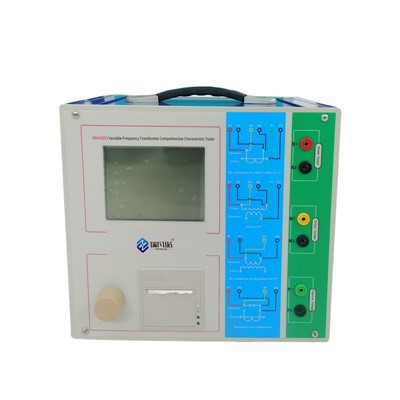
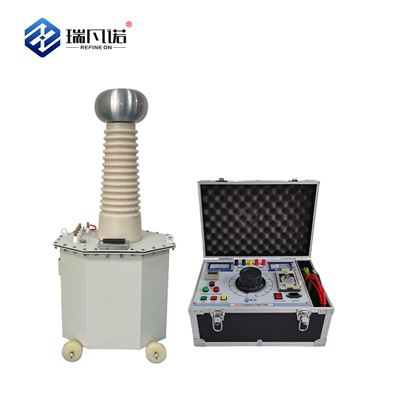
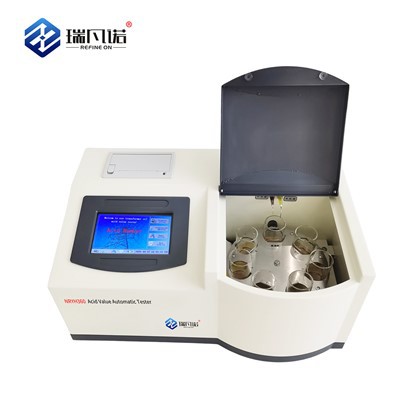
Let's start with the basic components of a Hipot Voltage Phasing Tester. It generally has a power source, a voltage control unit, a test lead, and a display. The power source is what provides the energy for the tester to work. It can be either an AC or DC power source, depending on the type of tester.
The voltage control unit is where you set the voltage levels for the test. You can adjust it based on the requirements of the device you're testing. For example, if you're testing a small electronic component, you might not need as high a voltage as when you're testing a large electrical transformer.
The test lead is used to connect the tester to the device under test. It's important to make good contact between the test lead and the device to ensure accurate results. And the display shows you all the important information, like the voltage being applied, the current flowing through the device, and whether the test passed or failed.
Now, let's get into the actual working process. When you turn on the Hipot Voltage Phasing Tester and connect it to the device you want to test, it first checks for any potential short - circuits. It does this by applying a very low voltage and measuring the current. If the current is higher than expected, it could mean there's a short - circuit somewhere, and the tester will usually give an error signal.
Once it confirms there are no short - circuits, it ramps up the voltage to the pre - set test level. This ramping up is done gradually to avoid any sudden stress on the device's insulation. As the voltage is being applied, the tester continuously monitors the current flowing through the device.
If the insulation is in good condition, only a very small amount of current (known as leakage current) will flow through it. But if there's a problem with the insulation, like a crack or a weak spot, more current will flow. When the current exceeds a certain limit, the tester detects this as a failure. It will then usually stop the test, turn off the voltage, and give a visual or audible alarm to let you know that the device's insulation has failed.


There are different types of tests that a Hipot Voltage Phasing Tester can perform. One common type is the dielectric withstand test. In this test, a high voltage is applied to the device for a specific period of time (usually a minute or so). The goal is to see if the insulation can withstand the voltage without breaking down.
Another type is the insulation resistance test. This test measures the resistance of the insulation. A high insulation resistance indicates good insulation, while a low resistance could mean there's a problem. The tester applies a small voltage and measures the resulting current to calculate the insulation resistance.
We offer a wide range of Hipot testers that can meet different needs. For example, our 5kVA/100kv Frequency AC Hipot Tester is great for high - voltage testing applications. It can provide a powerful and stable high - frequency AC voltage for accurate testing of large electrical equipment.
If you need something with a lower voltage range, our 5kVA/50kv Frequency AC Hipot Tester is a good choice. It's more suitable for testing medium - sized electrical devices.
We also have other related testing equipment, such as the Primary Current Injection Tester, which is used to test the functionality of current transformers and other protective devices in electrical systems.
The Smart Dc High Voltage Tester is another great option. It uses DC voltage for testing and has smart features that make it easy to operate and get accurate results.
And for testing circuit breakers, our Hipot Circuit Breaker Tester is a top - notch device. It can accurately test the performance of circuit breakers, ensuring they work properly when needed.
If you're in the market for a Hipot Voltage Phasing Tester or any of our other testing equipment, don't hesitate to reach out. Whether you're an electrical contractor, a manufacturer, or just someone who needs to test electrical devices for safety and quality, we've got the right solution for you. Contact us to start discussing your specific needs and let's find the perfect testing equipment for your projects.
References:
- Electrical Testing Handbook, various industry experts' contributions
- Manufacturer's manuals for Hipot testers and related electrical testing equipment