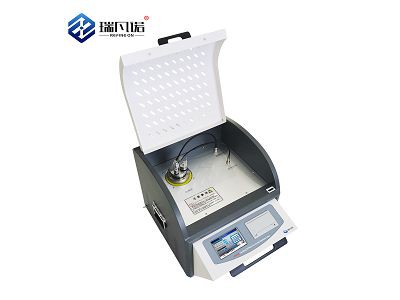
A voltage higher than the normal operating voltage is applied to the insulation of the device under test for a specified period of time. If the insulation is sufficiently good, the applied voltage will only produce a very small leakage current. If the leakage current of the insulation of the device under test remains within the specified range within the specified time, it can be determined that the device under test can operate safely under normal operating conditions. Its main purposes include: testing the insulation's ability to withstand working voltage or overvoltage; checking the manufacturing or maintenance quality of electrical equipment insulation; eliminating damage to insulation caused by raw materials, processing, or transportation, reducing early product failure rates; and verifying the electrical clearances and creepage distances of the insulation.
The test system typically consists of three main modules: a programmable power supply module, a signal acquisition and conditioning module, and a computer control system. The structure of a traditional withstand voltage tester mainly consists of a boost section (voltage regulating transformer, step-up transformer, and power switch), a control section (current sampling, timing circuit, alarm circuit), and a display circuit. Its working principle is as follows: the user controls the output voltage of the step-up transformer by adjusting the voltage regulator; the control unit connects the step-up power supply after receiving the start signal, and cuts off the power and alarms after the leakage current exceeds the limit or the countdown time expires; the display circuit is used to display the output voltage, leakage current, and countdown time.
The core difference between the programmable withstand voltage tester and traditional instruments lies in the step-up section: its high-voltage step-up is not adjusted by the mains power and voltage regulator, but by a single-chip microcomputer generating a 50Hz or 60Hz sine wave signal, which is then amplified and stepped up by a power amplifier circuit. The output voltage value is also controlled by the single-chip microcomputer.