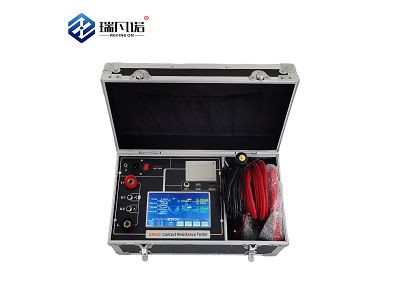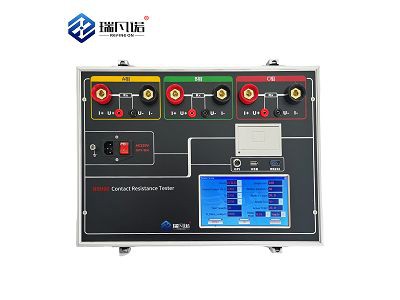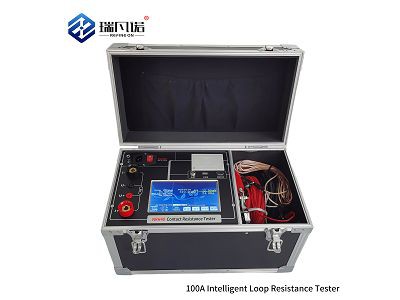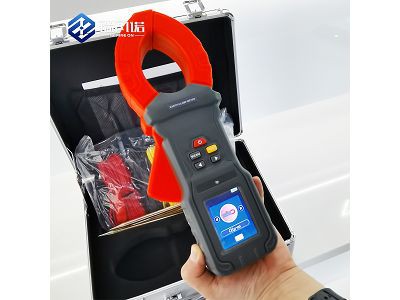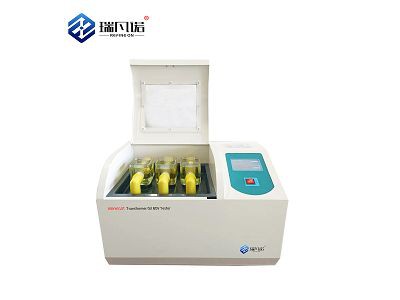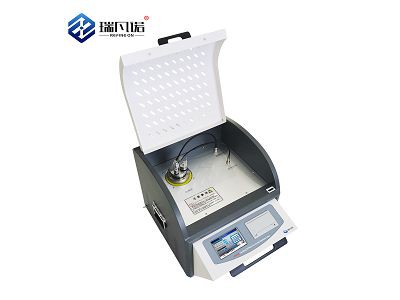
The basic principle of a transformer tester (especially a capacity/characteristic tester) is based on electromagnetic induction. A transformer is a device that uses electromagnetic induction to transform voltage, current, and impedance. The instrument has a built-in high-efficiency rechargeable battery, allowing it to operate without an external power supply. It also provides a three-phase precision 50Hz sine wave AC test power supply (or internal digitally synthesized three-phase standard sine wave signal).
When measuring transformer capacity and short-circuit losses, no external three-phase test power supply, voltage regulator, current booster, or other auxiliary equipment is required. When measuring DC resistance, the test principle uses a four-terminal test method and a thyristor rectifier circuit to adjust the predetermined test current value. This current, after rectification and filtering, is applied to the sample under test. The resistance value is directly read by comparing the voltage of the unknown circuit with that of a circuit with a known resistance value. The instrument can automatically perform waveform distortion correction, temperature correction, voltage correction (no-load test under non-rated voltage), and current correction (short-circuit test under non-rated current conditions). The operator only needs to input the correction parameters to automatically calculate the corrected results.