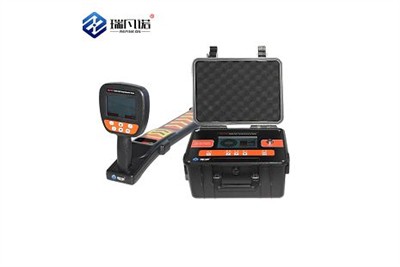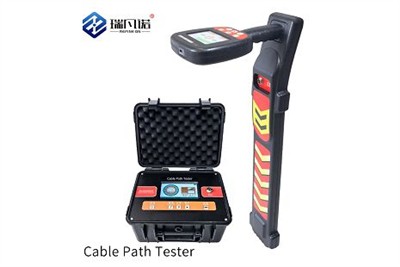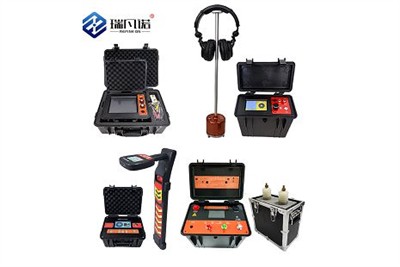
The core technologies of partial discharge testers are based on various physical principles, including the detection of transient ground voltage (TEV), ultrasonic waves (UA), ultra-high frequency (UHF) electromagnetic waves, and high-frequency pulsed current (HFCT) signals generated by discharges. The instrument employs multi-band synchronous acquisition, digital filtering, and advanced digital signal processing and intelligent noise suppression algorithms to improve the signal-to-noise ratio and anti-interference capabilities, effectively identifying weak discharge signals in complex electromagnetic environments. The advanced system features partial discharge signal classification and separation, and automatic identification of discharge types (such as corona discharge, levitation discharge, and internal air gap discharge), generating preliminary judgment suggestions.
The system supports various professional spectrum analyses, including phase-resolved partial discharge (PRPD), pulse sequence phase distribution (PRPS), time-of-flight (TOF), time-domain waveforms, q-n, and q-φ, facilitating technicians to assess discharge characteristics and severity from different perspectives. High-end detection systems utilize high sampling rates (up to 2GS/s) and high resolutions (such as 12-bit, 14-bit, and 16-bit) digitizers for signal acquisition, accurately capturing transient pulses generated by partial discharges. To ensure accurate phase correlation between the discharge signal and the power frequency voltage, the system supports multiple synchronization methods, including internal synchronization, external synchronization, wired synchronization, and wireless synchronization, to achieve precise phase synchronization and generate reliable PRPD maps.