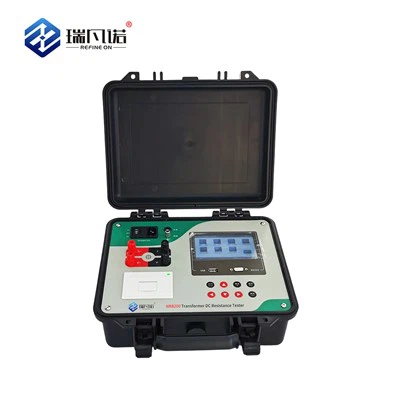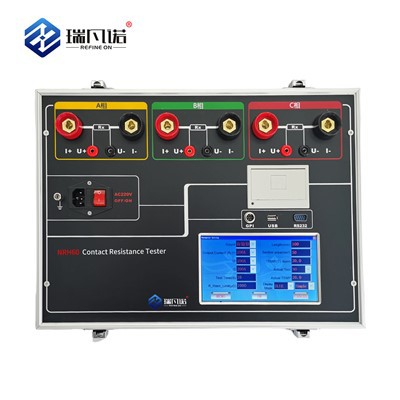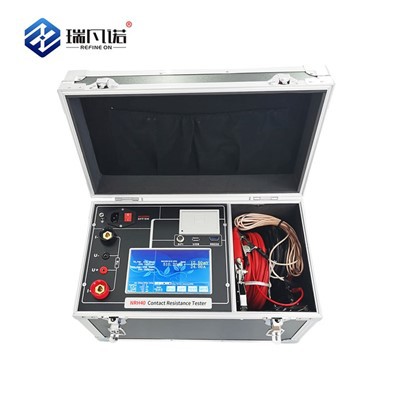

In the field of electrical engineering, accurately measuring the resistance of a motor is crucial for assessing its performance, detecting potential faults, and ensuring its safe and efficient operation. A Duplex Micro - Ohmmeter is an invaluable tool for this task, offering high precision and reliability. As a supplier of Duplex Micro - Ohmmeters, I am here to guide you through the process of using this device to measure the resistance of a motor.
Understanding the Basics of a Duplex Micro - Ohmmeter
A Duplex Micro - Ohmmeter is designed to measure extremely low resistances with high accuracy. It operates on the principle of passing a known current through the test object and measuring the resulting voltage drop across it. Using Ohm's law (R = V/I), the resistance can be calculated.
The duplex feature allows for simultaneous measurement of two resistances, which can be particularly useful when comparing the resistances of different windings in a motor. This helps in quickly identifying any imbalances that could indicate a problem such as a short - circuit or an open - circuit in the motor windings.
Preparing for the Measurement
Before you start measuring the resistance of a motor using a Duplex Micro - Ohmmeter, there are several important steps to take:
Safety First
Safety should always be your top priority when working with electrical equipment. Make sure the motor is completely disconnected from the power source. This includes turning off the circuit breaker, removing fuses, and using a voltage tester to confirm that there is no voltage present at the motor terminals. Wear appropriate personal protective equipment (PPE), such as insulated gloves and safety glasses.
Select the Right Range
Most Duplex Micro - Ohmmeters have multiple measurement ranges. Select a range that is appropriate for the expected resistance of the motor windings. If you are unsure, start with the highest range and then adjust to a lower range for a more accurate measurement as needed.
Check the Instrument
Ensure that the Duplex Micro - Ohmmeter is in good working condition. Check the battery level if it is battery - operated, or make sure it is properly connected to a power source if it is mains - powered. Zero the instrument according to the manufacturer's instructions. This usually involves short - circuiting the test leads and adjusting the zero control to read zero resistance.
Measuring the Resistance of a Motor
Once you have completed the preparation steps, you can proceed with the actual measurement:
Connect the Test Leads
Identify the motor terminals. A typical three - phase motor has six terminals (U1, V1, W1, U2, V2, W2). For a single - phase motor, there are usually two main terminals. Connect the test leads of the Duplex Micro - Ohmmeter to the appropriate motor terminals. Make sure the connections are secure to ensure accurate measurements.


If you are using the duplex feature to compare two windings simultaneously, connect one set of test leads to the terminals of one winding and the other set to the terminals of the second winding.
Take the Measurement
Turn on the Duplex Micro - Ohmmeter and wait for it to stabilize. The instrument will display the resistance values of the windings. Record the measurements carefully. If the readings are in a different unit than you need, convert them accordingly.
Repeat the Measurement
To ensure accuracy and reliability, repeat the measurement several times. Take the average of the readings to get a more representative value. Also, measure the resistance of all the windings in the motor, including both main and auxiliary windings if applicable.
Interpreting the Results
After obtaining the resistance measurements, you need to interpret the results to assess the condition of the motor:
Compare with Specifications
Refer to the motor's technical specifications to find the expected resistance values for its windings. Compare the measured values with the specified values. If the measured resistance is significantly higher or lower than the specified value, it could indicate a problem.
Check for Imbalances
In a three - phase motor, the resistances of the three windings should be approximately equal. Calculate the percentage difference between the highest and lowest resistance values. A large imbalance (e.g., more than 5%) may indicate a short - circuit, an open - circuit, or a problem with the motor's insulation.
Look for Trends
If you have access to historical resistance measurements of the motor, compare the current readings with the past values. A gradual increase in resistance over time could indicate aging or overheating of the motor windings, while a sudden change could be a sign of a more serious problem.
Other Related Resistance Testers
Apart from the Duplex Micro - Ohmmeter, there are other types of resistance testers that can be useful in motor testing:
- Three Phase Loop Resistance Tester: This tester is specifically designed to measure the loop resistance of three - phase electrical systems, including motors. It can provide more comprehensive information about the electrical integrity of the motor's three - phase circuit.
- Clamp On Earth Resistance Tester: This type of tester is used to measure the earth resistance of electrical equipment, including motors. A proper earth connection is essential for the safety of the motor and the people working around it.
- Insulation and Resistance Tester: This tester can measure both the insulation resistance and the resistance of the motor windings. Insulation resistance is an important parameter for assessing the condition of the motor's insulation.
- Digital High Voltage Insulation Tester: It is used to test the insulation of high - voltage motors at higher voltages. This helps in detecting insulation weaknesses that may not be apparent at lower voltages.
Conclusion and Procurement Invitation
Using a Duplex Micro - Ohmmeter to measure the resistance of a motor is a straightforward yet critical process that can provide valuable insights into the motor's condition. By following the steps outlined in this blog, you can ensure accurate measurements and effectively assess the performance and health of your motors.
If you are in the market for a reliable and high - quality Duplex Micro - Ohmmeter or any of the other resistance testers mentioned above, we are here to help. Our products are designed with the latest technology and highest standards of quality to meet your testing needs. Whether you are an electrical engineer, a maintenance technician, or a professional in the industrial sector, our resistance testers can be your trusted tools for accurate and efficient measurements.
Contact us today to discuss your specific requirements and let's start a conversation about how our products can benefit your business.
References
- Electrical Engineering Handbook, Third Edition, Richard C. Dorf
- Motor Testing and Maintenance Guide, Electrical Power Research Institute