Early dielectric loss measurements widely used Schering bridges (such as the QS1 bridge). These required external standard capacitors, boost converters, and power control boxes, necessitating balancing and result conversion, making them inconvenient to use.
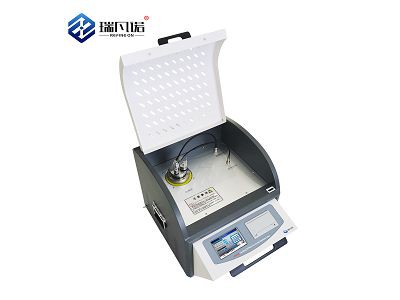
The development of dielectric loss testers replaced the traditional QS high-voltage bridge. Their technological evolution broke through the traditional bridge measurement method, employing frequency conversion power supply technology and utilizing a microcontroller for automatic frequency conversion, analog-to-digital conversion, and data processing, achieving automated measurement and simplifying the operation process.
Modern, widely used digital high-voltage dielectric loss testers employ digital notch filtering technology to avoid interference from power frequency electric fields. Their basic measurement principle is based on the traditional Schering bridge. The measurement system synchronously samples the current signals of the standard circuit and the circuit under test at high speed, and then performs analog-to-digital conversion and vector calculations to derive the capacitance and dielectric loss values of the test sample.
Early dielectric loss measurements widely used the Schering bridge (such as the QS1 bridge). During testing, external standard capacitors, boost converters, and power control boxes were required. Balancing adjustments were necessary, and results needed to be converted, making it inconvenient to use.
The development of dielectric loss testers has replaced the traditional QS high-voltage bridge. Their technological evolution has broken through the traditional bridge measurement method, employing frequency conversion power supply technology and utilizing a microcontroller for automatic frequency conversion, analog-to-digital conversion, and data calculation, achieving automated measurement and simplifying the operation process.
Modern, widely used digital high-voltage dielectric loss testers employ digital notch filtering technology to avoid interference from power frequency electric fields. Their basic measurement principle is based on the traditional Schering bridge principle. The measurement system rapidly and synchronously samples the current signals of the standard circuit and the circuit under test, and then performs analog-to-digital conversion and vector calculations to obtain the capacitance and dielectric loss values of the test sample.