
Hey there! As a supplier of Closed Cup Flash Point Testers, I often get asked about how to customize the testing parameters of these nifty devices. In this blog post, I'm gonna break it all down for you, so you can get the most accurate and relevant results from your flash point testing.

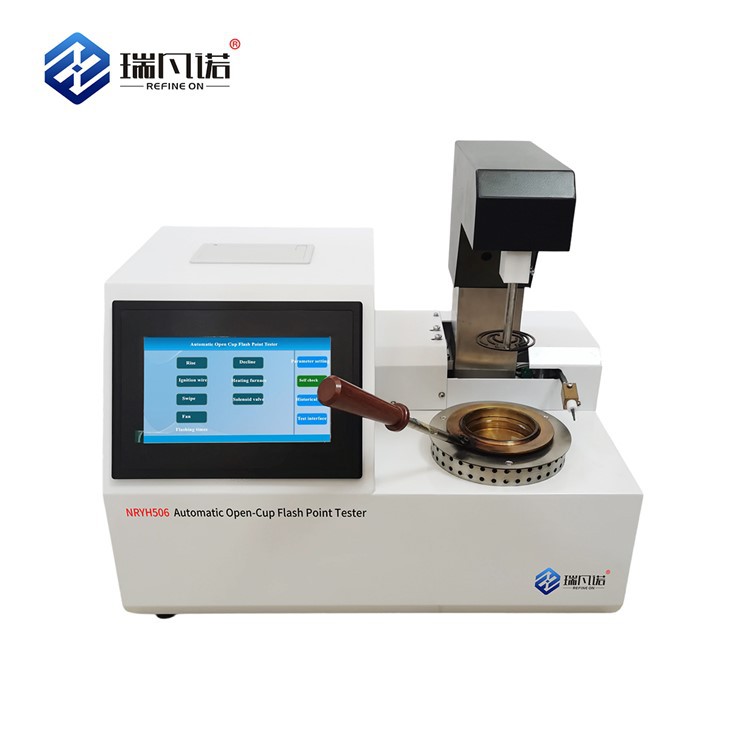
Understanding Closed Cup Flash Point Testers
First things first, let's have a quick refresher on what a Closed Cup Flash Point Tester is. It's a device used to determine the flash point of a flammable liquid. The flash point is the lowest temperature at which the liquid can evaporate to form an ignitable mixture with air. Closed Cup testers work by heating the liquid in a closed container and periodically introducing a small flame to check for ignition.
There are different types of Closed Cup Flash Point Testers available, each with its own set of standard testing methods and parameters. But the good news is, most modern testers come with the option to customize these parameters to suit your specific needs.
Why Customize Testing Parameters?
Before we dive into the how-to, let's talk about why you might want to customize the testing parameters in the first place. There are several reasons for this:
- Different Samples: Different liquids have different properties, and you might need to adjust the testing parameters to get accurate results for a specific sample. For example, highly viscous liquids might require a slower heating rate to ensure proper mixing and temperature distribution.
- Testing Standards: Depending on your industry or the specific requirements of your project, you might need to follow certain testing standards that have different parameter settings compared to the default settings of the tester.
- Research and Development: If you're involved in R&D, you might want to experiment with different parameter settings to study the behavior of a liquid under different conditions.
How to Customize Testing Parameters
Now, let's get into the nitty-gritty of how to customize the testing parameters of a Closed Cup Flash Point Tester. Here are the main parameters you can usually adjust and how to do it:
1. Heating Rate
The heating rate determines how quickly the liquid is heated. A faster heating rate can save time, but it might not allow for accurate temperature measurements or proper vapor formation. On the other hand, a slower heating rate might give more accurate results but can be time-consuming.
To customize the heating rate, you'll usually need to access the tester's settings menu. Look for options related to heating rate or temperature control. You can typically set the heating rate in degrees Celsius per minute (°C/min). For example, if you're testing a liquid with high viscosity, you might want to set a slower heating rate, like 1 °C/min, to ensure uniform heating.
2. Stirring Speed
Stirring the liquid during testing helps to ensure uniform temperature distribution and proper vapor formation. The stirring speed can also affect the accuracy of the flash point measurement.
Most Closed Cup Flash Point Testers allow you to adjust the stirring speed. Similar to the heating rate, you can access this setting through the tester's menu. The stirring speed is usually measured in revolutions per minute (RPM). You might need to experiment a bit to find the optimal stirring speed for your specific sample.
3. Initial Temperature
The initial temperature is the starting temperature of the liquid before the heating process begins. Setting the right initial temperature can be crucial, especially for liquids that have a low flash point or are sensitive to temperature changes.
To customize the initial temperature, look for the initial temperature setting in the tester's menu. You can enter the desired temperature in degrees Celsius (°C). Make sure to choose an initial temperature that is appropriate for the sample you're testing.
4. Flame Application
The frequency and duration of flame application can also be customized. Flame application is used to check if the vapor above the liquid is ignitable.
In the tester's settings, you can usually find options to adjust the flame application interval (how often the flame is applied) and the flame duration (how long the flame is present). These settings can vary depending on the type of tester and the sample being tested.
Importance of Accuracy
When customizing the testing parameters, it's essential to prioritize accuracy. Even small changes in the parameters can have a significant impact on the flash point measurement. That's why it's crucial to follow the manufacturer's guidelines and any relevant testing standards.
Before you start using the customized parameters for critical tests, it's a good idea to perform a few trial runs with a known sample to validate the results. This will help you ensure that the customized settings are accurate and reliable.
Other Related Testing Equipment
If you're in the business of testing transformer oil or other flammable liquids, you might also be interested in some of our other testing equipment. We offer a range of high-quality testers, including the Oil Acidity Tester, the Automatic Transformer Oil Water-Soluble Acid Tester, the 100kV Oil Dielectric Strength Tester, the Open Cup Flash Point Tester, and the 80kV Oil Dielectric Strength Tester. These testers can provide valuable information about the quality and properties of your samples.
Contact Us for Purchase and Consultation
If you're interested in purchasing a Closed Cup Flash Point Tester or any of our other testing equipment, or if you have any questions about customizing the testing parameters, feel free to reach out to us. We have a team of experts who can provide you with all the information and support you need.
Customizing the testing parameters of a Closed Cup Flash Point Tester can be a great way to get more accurate and relevant results for your specific applications. By understanding the key parameters and knowing how to adjust them, you can ensure that your flash point testing is both effective and reliable.
References
- ASTM D93 - Standard Test Methods for Flash Point by Pensky-Martens Closed Cup Tester
- ISO 2719 - Determination of flash point - Pensky - Martens closed cup method